The audiovisual industry in Spain has just crossed the threshold of a new era. With the full entry into force and application of Implementing Regulation (EU) 2019/947 and Delegated Regulation (EU) 2019/945, the sky is no longer governed by the rules of the past. We are facing a total legislative harmonization with Europe that has rewritten aviation safety rules, putting an end to transitional periods and affecting absolutely all aircraft, from the smallest drones to heavy cinematography equipment.
This change also comes in a delicate geopolitical context of “tense calm” that has raised alert levels throughout the airspace, causing a drastic increase in inspections by the State Security Forces and Corps (FFCCSS). Today, the police do not just look at the sky; they scrutinize technical documentation on the ground to ensure strict compliance with European regulations.
For the audiovisual sector professional—whether a production manager, director, or agency—it is vital to understand what has changed, because legal responsibility no longer falls only on the person holding the controller. But, what do these changes really mean and why have they left a large part of the operators grounded?
The new drone “ID”: understanding the Classes (C0 to C6)
To bring order to the sky, European regulations have implemented a mandatory classification system for all UAS (Unmanned Aircraft Systems), similar to energy labels or environmental badges. Each drone must carry a “Class” marking (CE with a number from 0 to 6) that determines its level of danger based on its weight and kinetic energy.
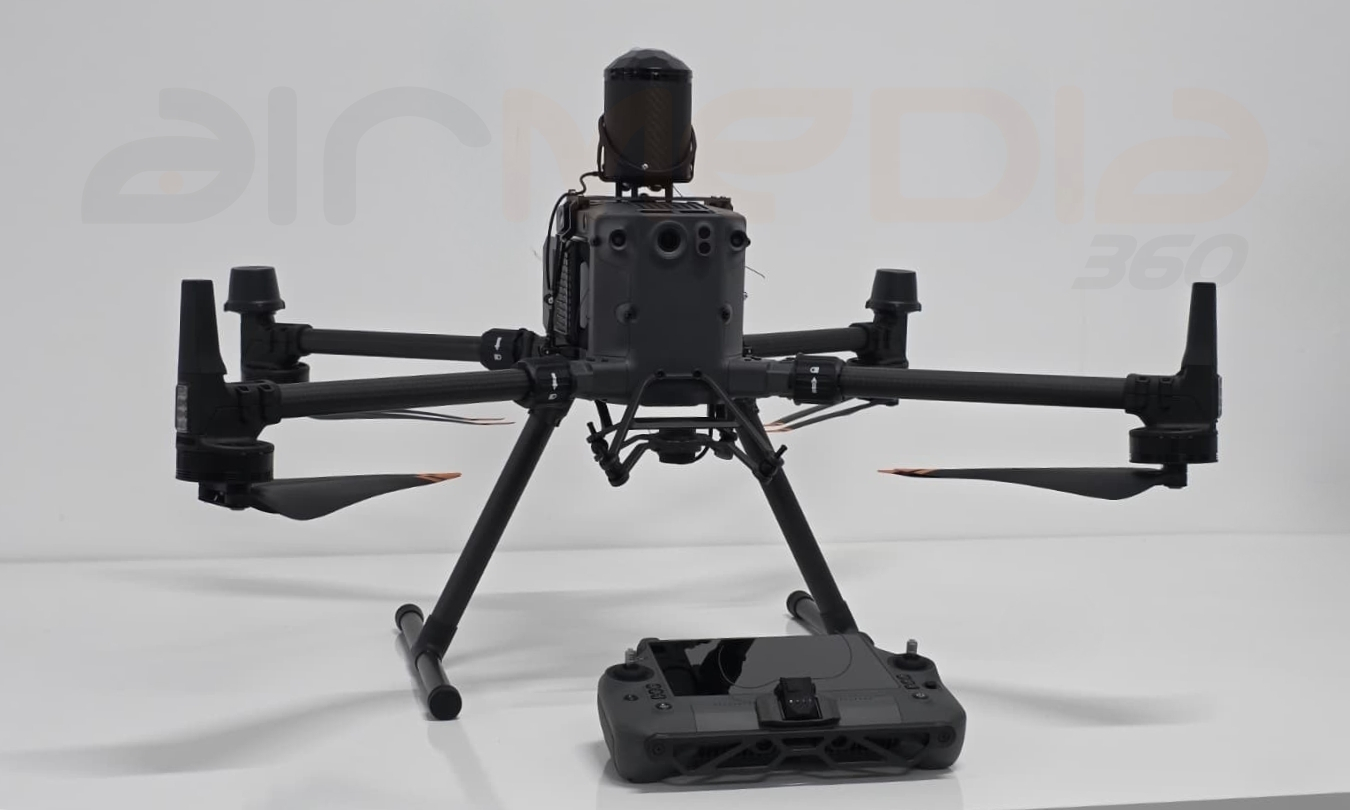
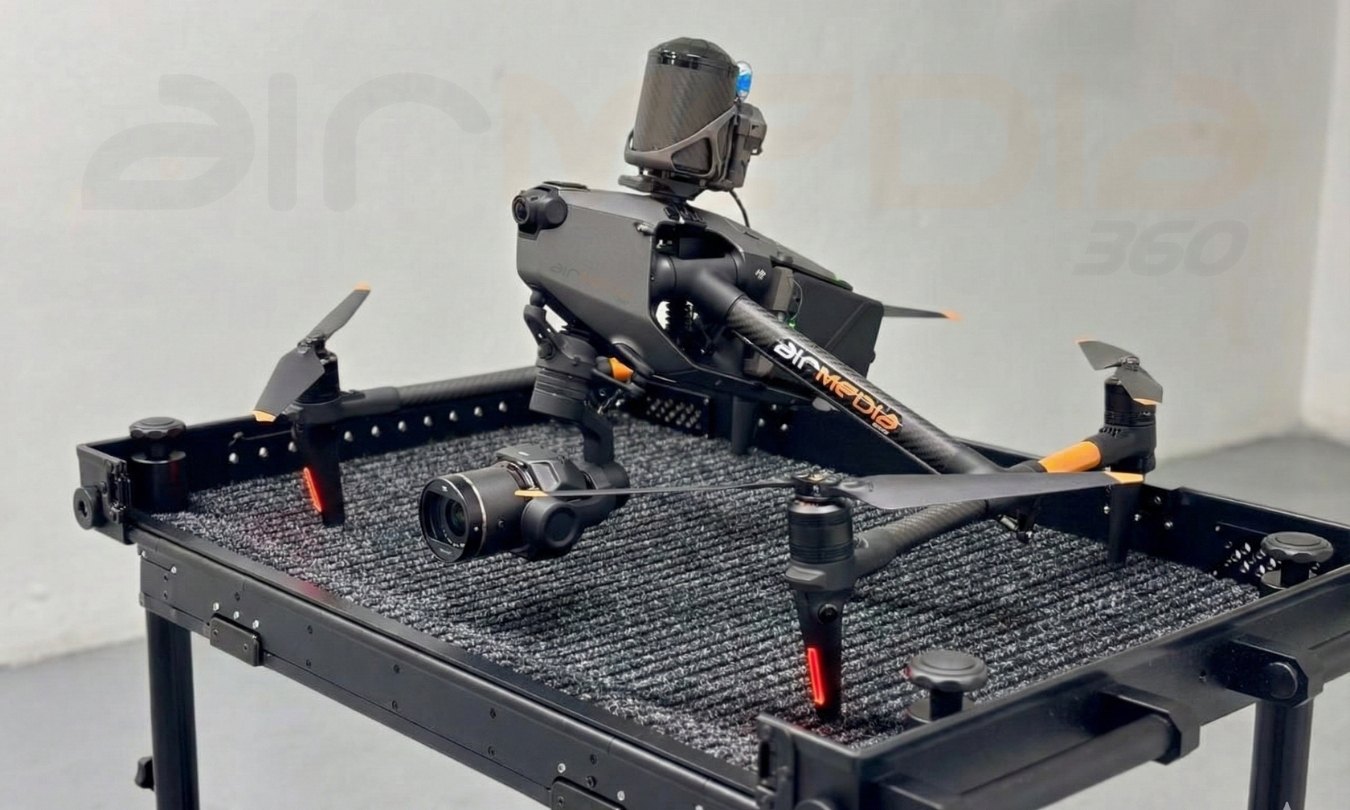
Here lies the central problem for cinema and advertising: the high-end drones we use to obtain cinematic quality, such as the DJI Inspire 3 or the Matrice 350 (for VFX), belong by factory default to Class C3. Regulation (EU) 2019/947 establishes that a C3 aircraft, due to its weight and power, must fly away from urban environments and people not involved in the operation under the open category A3. Simply put: the industry’s standard tool has been legally restricted to rural areas or unpopulated spaces.
So, how can you legally shoot a commercial on Gran Vía or an action scene in the center of Barcelona? The only legal key is to operate under Class C5. This label allows flights in what are called “Standard Scenarios” (STS-01), enabling flight in controlled urban areas. This is vital: all old STS.ES.01 scenarios expired on December 31, 2025, for all operators, making the adaptation to Class C5 the only legally operational path today.
The engineering behind legality: stock crisis and exclusivity
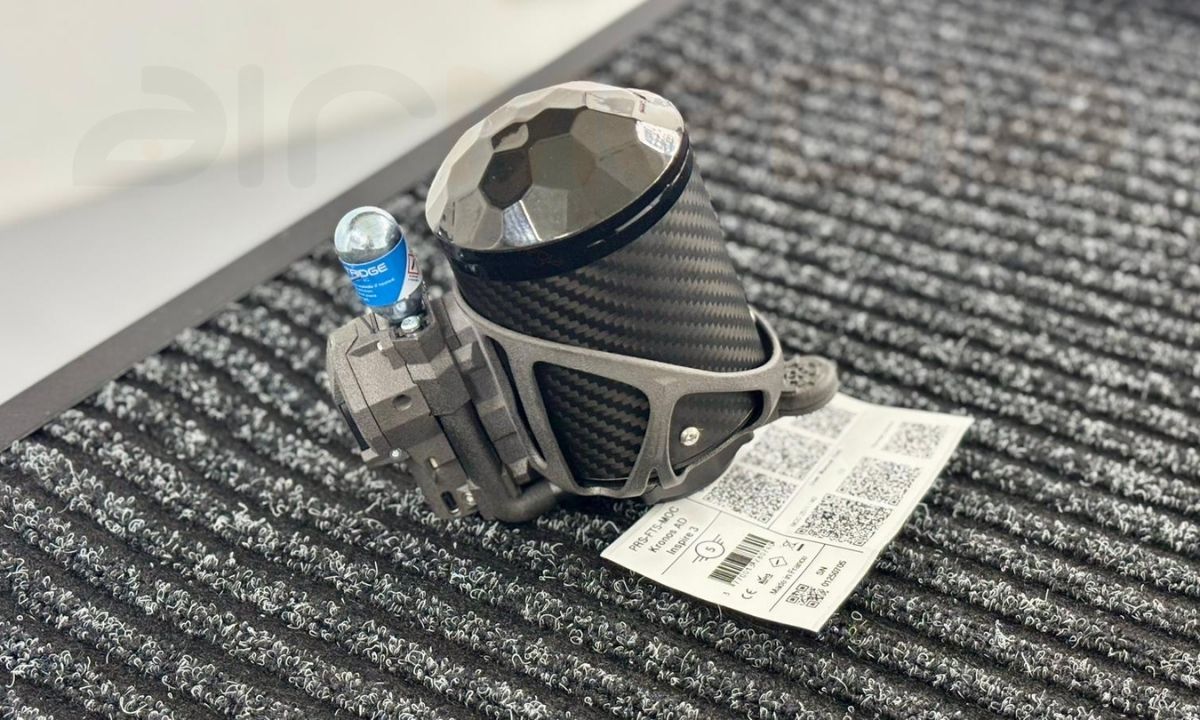
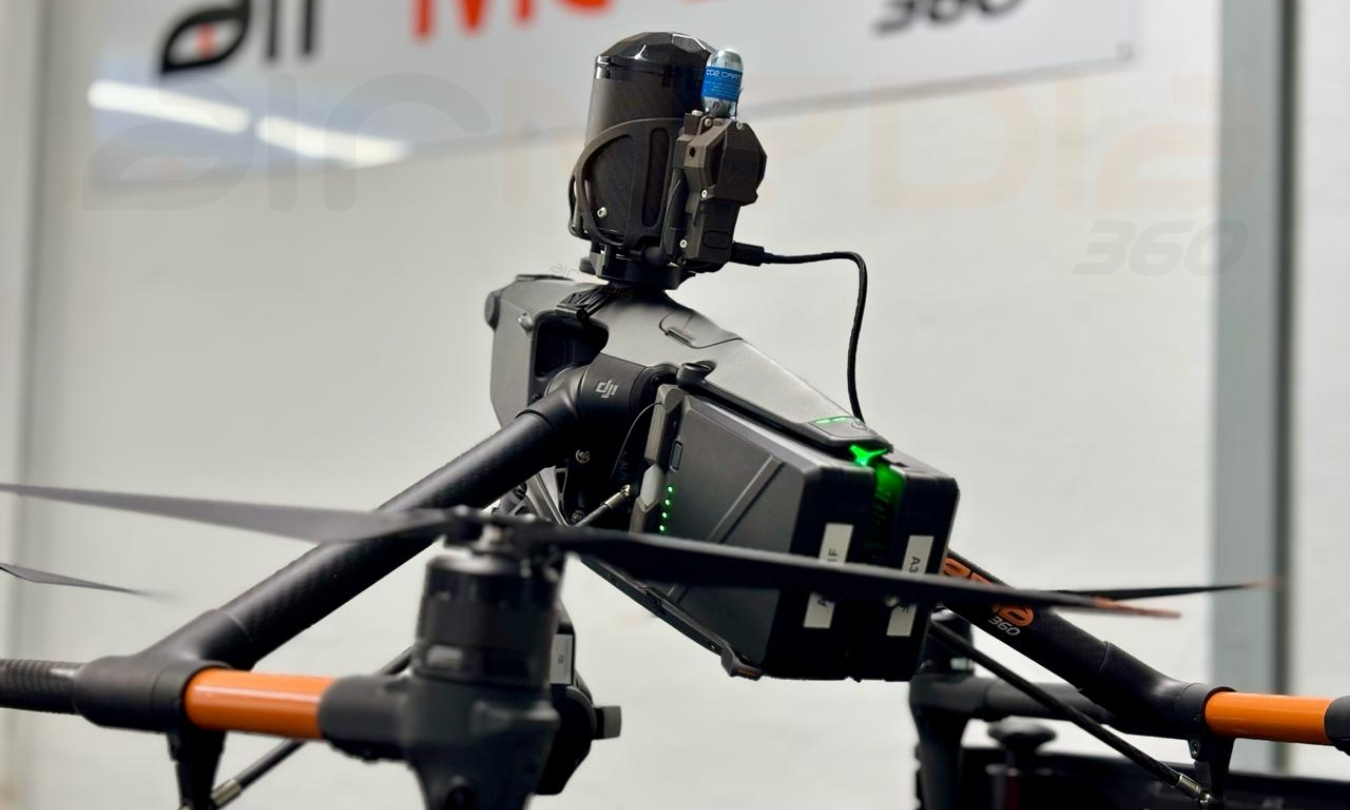
This is where Airmedia360 has taken a decisive step, achieving an operational advantage that is almost impossible for the competition to replicate today. Given that the manufacturer delivers the drones as C3, to fly in the city it is necessary to subject the aircraft to a complex conversion process to C5 in accordance with the regulation.
It is not a simple formality. Converting a drone involves installing physical modifications from approved European manufacturers, such as high-security parachutes and independent flight termination systems (FTS).
The current market situation is critical: these European components are sold out across the continent. There is a widespread stock shortage with delivery times exceeding 8 weeks. While other operators are now trying to acquire this equipment and are entering months-long waiting lists, we already have our fleet adapted and operational after an investment of over 3,500 euros per aircraft.
Furthermore, we have overcome the final administrative barrier in record time. Until just a few days ago, AESA did not technically allow adding the C5 class marking to the Inspire 3. Since last Monday, this option is now possible and, thanks to our prior preparation, we have been immediate in our management. We are the first operator in Spain to legally fly the Inspire 3 in the city under this new framework, while the rest of the sector is still waiting for parts or processing.
The human factor: certified pilots for the new era
But technology is useless without expert and legally accredited hands to guide it. Adaptation to this new framework does not stop at hardware; it has required a complete professional update of our human capital.
At Airmedia360, all our pilots have returned to the classrooms and flight fields to pass the demanding official exams of the new European regulation. We have certified our aptitude with a specific practical assessment for the new standard scenarios. This guarantees our clients that whoever is at the controls of their shoot not only possesses artistic skill, but also holds the current and specific certification required by AESA to operate legally in complex environments.
What is the EARO and why is it critical?
In addition to the hardware and the pilots, bureaucracy has tightened. After the expiration of all STS.ES.01 scenarios on December 31, 2025, to fly in these complex scenarios in controlled airspace, the law requires an EARO (Operational Safety Aeronautical Study).
The reality is that the expiration of the STS.ES.01 scenarios has rendered all associated documents obsolete. At Airmedia360, we have had to draft from scratch not only the new EAROs, but also our Operational Declaration and Operations Manual to ensure full compliance.
Think of the EARO as the operator’s specific “safety instruction manual.” It is not a simple permit; it is an exhaustive technical document that analyzes all possible risks of an operation and defines how they are mitigated.
The invisible risk: MILLION-EURO fines and shared responsibility
It is essential for Production Companies to be aware that hiring “cheap” or unregulated services today is a highly risky operation. The Air Safety Law 21/2003 is severe: very serious infractions, especially those that compromise safety in controlled or urban airspace, can lead to fines of up to 4.5 million euros (as stipulated in Art. 55 for professional operators).
And most importantly: liability can extend jointly and severally to the contracting company. If a police inspection halts a shoot because the drone is not C5, the pilots do not have the new certification, or the EARO is invalid, production stops instantly, with the economic and reputational disaster that entails.
The peace of mind of flying with Airmedia360
Faced with uncertainty, Airmedia360 offers immediate certainties. We reached January 1, 2026, with our homework done and our authorizations signed by ENAIRE.
We are the only option today that guarantees a shoot with cinema drones in the city under the full protection of the law, without waiting months due to a lack of parts. In a closely monitored and complex environment, legal security is not a luxury; it is the only way to operate.
We are at your disposal to advise you and ensure the success of your next production.